Deep house is one of those genres that people feel before they can define it. You hear a warm bassline, a chord that hangs in the air just a little too long, a vocal sample that sounds like it came from somewhere sacred, and something in you settles. That feeling is not accidental. It is the whole point.
But what is deep house music, exactly? Where does it come from, and what makes it different from everything else that gets called house? This article breaks down the deep house definition in full, covering its roots, its sound, and why it continues to matter.
The Deep House Definition
Deep house is a subgenre of house music defined by its slower tempo, soulful harmonic content, and emotional restraint. The production leans on lush chords drawn from jazz, gospel, and soul music. The atmosphere is introspective rather than euphoric.
At its core, deep house music prioritizes feeling over energy. It does not push you to the floor. It draws you in.
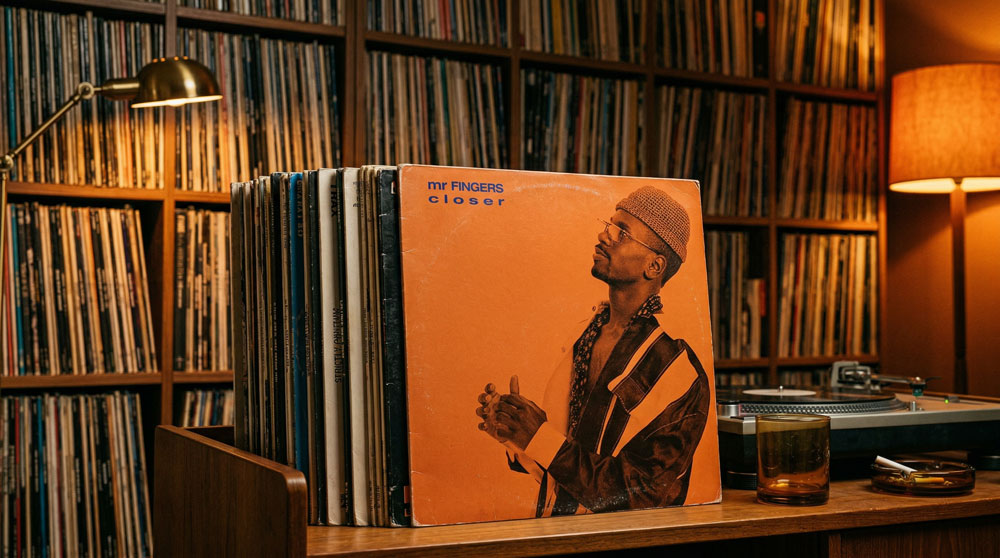
The deep house genre emerged in Chicago and New York in the mid-1980s, with producers like Larry Heard (Mr. Fingers) and artists connected to the Def Mix and NuGroove scenes. The template they built was simple on the surface and endlessly expressive underneath: four-on-the-floor kick, a warm sub-bass, jazz-influenced chord stabs or pads, and just enough space for the music to breathe.
That space is arguably the most important element. Deep house is as much about what is left out as what is put in.
What Does Deep House Sound Like?
Defining deep house music means listening for a specific set of characteristics that appear across the genre, regardless of era or geography.
Tempo. Deep house traditionally sits between 120 and 125 BPM, slower than peak-time house or tech house. That range gives melodies and harmonies room to develop, and gives listeners time to actually feel the music. In recent productions, however, the tempo has been creeping up. Tracks at 126, 127, even 129 or 130 BPM are increasingly appearing under the deep house label. Whether that reflects genuine evolution or the influence of adjacent genres like melodic house and tech house depends on what else the track brings to the table. Tempo alone does not define the genre.
Harmony. This is where deep house separates itself most clearly from other forms of house. Chord progressions in deep house are complex and often borrowed from jazz and soul traditions. Seventh chords, extended voicings, minor keys, and gospel-influenced chord movements are all common. The harmonic language is rich.
Bass. The bassline in deep house is almost always warm, rounded, and melodic. It is not punishing. It supports the chords rather than competing with them. In many classic deep house tracks, the bass is the most soulful element in the entire arrangement.
Percussion. The drum programming is functional and restrained. The focus is on groove, not complexity. Hi-hats tend to be open and slightly swung. Snares are soft. The kick is present but not overwhelming. Everything serves the pocket.
Atmosphere. Deep house creates a mood. Whether through pads, strings, piano, vocal samples, or reverb-soaked textures, the production builds an environment. Listening to deep house should feel like being inside something.
The Deep House Genre Today
The deep house genre has expanded significantly since its Chicago and New York origins. What began as a distinctly American, Black music form influenced by gospel and jazz has traveled globally and absorbed local influences along the way. Today, deep house production comes from South Africa, the Netherlands, the UK, Brazil, and dozens of other places, each bringing its own cultural texture to the template.
South African deep house in particular has developed its own identity, with a heavier emotional weight and a strong connection to Afro soul traditions. Artists like Napsoul and Lexiton Deep SA, whose collaborative release "Take It Deep" (Remixes) earned a Traxsource Deep Essential designation, demonstrate how the genre absorbs and reflects its environment while remaining grounded in the same core values.
At the same time, deep house has fragmented into related but distinct territories. Soulful house, organic house, Afro deep, and melodic house all trace lineage back to the deep house definition but occupy their own space on streaming platforms and DJ sets. The common thread across all of them is intention: music that wants to communicate something beyond simple dancefloor function.
Deep House on the Dancefloor
There is a common misconception that deep house is background music or music for headphones only. That misreads what the genre does in a proper club environment.
Deep house works on a dancefloor precisely because it does not demand anything from the crowd. It is not aggressive. It does not manipulate energy through cheap tension and release. Instead, it creates a sustained state. Good deep house DJing builds slowly, holds that feeling for extended periods, and trusts the music and the audience to meet somewhere honest.
"In The Deep" by Manuel Varey and "Decimal Point Chapter" by Spinnage, both Traxsource Deep Essentials, are examples of tracks that function this way. They are not designed to peak. They are designed to sustain, to keep a body moving and a mind somewhere it wants to stay.
Deep house does not manipulate the crowd. It invites them somewhere and waits to see if they follow.
Why the Deep House Meaning Goes Beyond Genre Labels
Deep house has always been a philosophy as much as a sound. The original producers who defined the genre were not just making dance music. They were making music that reflected specific emotional and spiritual values: soul, depth, restraint, craft. The term "deep" in deep house was never purely about frequency. It was about intention.
That is what STORK Recordings builds around. Releases like "Left The Building" by Phat Bianco and "Wasting Time" by Peter van Leeuwen are not labeled deep house because they hit a BPM range or use a particular synthesizer. They carry that label because they were made with the same values that defined the genre from the start.
Deep house music is a commitment. To feeling over formula. To space over saturation. To music that does something to a person rather than just at them.
Deep House vs. House Music
If you want to understand exactly where deep house ends and the broader house music category begins, and how the two relate historically and sonically, we cover that in full here: Deep House vs. House Music.